Spring, When Everything Starts Again
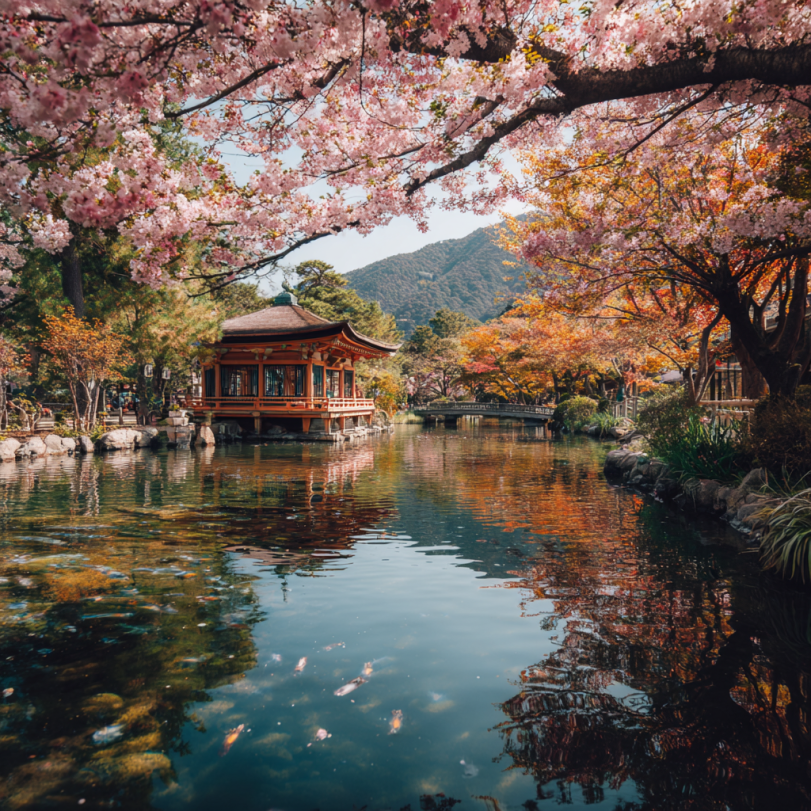
If you arrive in March or early April, you’ll notice how the air feels both warm and crisp at the same time, like winter forgot it was supposed to leave but spring barged in anyway. Tokyo is one of the best places to begin, mostly because the city celebrates sakura with full enthusiasm. Ueno Park becomes a long tunnel of blossoms, busy and loud and cheerful. Meguro River looks almost unreal, with pink petals floating down the water like confetti from some giant celebration.
Kyoto is different. More graceful, more shadowed. The blossoms around the temples and old wooden houses feel like something preserved in an old painting. Philosopher’s Path turns into a gentle dreamlike walk, with petals drifting onto the canal beside you. Nara lights up in soft pink around its deer filled parks. Even Osaka, usually busier and more chaotic, feels softer around the riverside rows of trees.
The countryside has its own charm. In places like Hirosaki or Kawazu, cherry blossoms bloom earlier or later than in the big cities, giving you a wider window. Mountains bloom later, coastal towns sometimes earlier. Chasing sakura can become a small adventure, a moving target that keeps things playful.
But spring in Japan is more than flowers. It’s graduation season, start of the school year, start of new jobs. People cut their hair, buy fresh notebooks, reorganize their lives. The country feels like it’s waking up and stretching.
Food shifts too. Strawberries take over dessert menus. Sakura flavored snacks appear everywhere, from mochi to coffee drinks. Fresh bamboo shoots show up in spring dishes. And there’s this kind of positive energy, like everyone is secretly excited about something.
Autumn, When Colors Grow Deep
Autumn is the opposite energy but just as magical. Where spring feels light and fluttery, autumn feels grounded and calm. The word for the autumn leaves is momiji, and the tradition of leaf viewing is called koyo. Just like hanami, it’s a nationwide event, only a little quieter and somehow more reflective.
Kyoto is breathtaking in autumn. Absolutely breathtaking. The temples that looked soft and floral in spring turn fiery and dramatic. Kiyomizudera glows in red leaves. Arashiyama’s mountains wrap themselves in orange. Even the small gardens, tucked behind old wooden gates, feel brighter. The contrast between red leaves and black lacquer or stone paths is almost too perfect.
Nikko, a few hours north of Tokyo, becomes a masterpiece of color. The mountain roads twist through forests that light up like lanterns. Lakes mirror the trees. Shrines sit surrounded by red and gold like they’re part of the season itself.
Farther north, places like Aomori and Hokkaido get the first wave of autumn. Daisetsuzan National Park often sees colors as early as September. The forests turn golden while summer is still fading in other parts of the country. Hiking feels fresh and invigorating, with chilly wind brushing against your arms.
In the cities, autumn brings festivals, art events, and lots of seasonal foods. Sweet potatoes roasted on street corners. Chestnuts in many forms. Persimmons that hang outside traditional houses, drying in the sun. Hot pot meals return to menus. People start wearing layers again, scarves and jackets, walking with that lively fall energy that feels familiar no matter where you’re from.
The Quiet Magic Between the Highlights
One thing about Japan is that even if you skip the major tourist places, the seasons still find you. You might be walking through a random neighborhood and suddenly see a handful of trees glowing red in the late afternoon light. Or take a train ride and watch cherry blossoms flash by like pink fireworks outside the window.
It’s not always about checking off the big sights. Sometimes it's about waiting for the perfect breeze under a sakura tree, or finding a cup of hot tea in a small family cafe after walking through a rain sprinkled autumn street. Sometimes the petals fall a little earlier than expected, or the leaves don’t turn bright enough that year. And that’s fine. Japanese seasons are about embracing imperfection, the idea that beauty can change shape, timing, color.
Local people appreciate these small details. They take photos, yes, but they also pause, quietly. Travelers notice that. You start pausing too. Something about Japan teaches you to slow down without even trying.
Where to Go for the Best Seasonal Views
You can chase spring or autumn almost anywhere in the country, but some spots really shine.
For spring:
Tokyo’s Nakameguro and Sumida Park for riverside blooms.
Kyoto’s Maruyama Park for classic hanami atmosphere.
Hirosaki Castle for massive, dramatic trees reflected in moats.
Yoshinoyama for mountain slopes covered in thousands of cherry trees.
For autumn:
Kyoto’s Tofukuji, famous for flaming red maples.
Nikko’s Irohazaka Road for high altitude colors.
Arashiyama for a full valley of warm shades.
Lake Kawaguchi for Mt Fuji framed in red leaves.
But the truth is simple. You don’t need to chase the "best". Japan’s seasons find you. Even a small town park can surprise you with colors or petals that feel just as meaningful.
Food That Tastes Like the Season
Spring and autumn both have strong seasonal foods that locals wait all year for.
In spring, it’s strawberries so sweet they taste almost unreal, bamboo shoots, young greens, sakura flavored sweets, and fresh seafood that comes into season. Bakeries go wild with pink pastries. Convenience stores release limited flavor snacks that disappear fast.
Autumn is deeper. Heartier. More earthy. Sweet potatoes baked until caramelized. Roasted chestnuts in paper bags. Pumpkin flavored treats everywhere. Hot pots shared with groups. Grilled fish that tastes crisp and warm. It’s the kind of food that makes cool evenings feel even cozier.
Why These Seasons Matter
Japan is beautiful year round, no question. But spring and autumn reveal something special. They show how deeply Japanese culture is connected to time, to nature, to patterns that repeat every year but never feel the same twice.
The seasons remind you to look around. To notice details. To step slower. That’s probably why people fall in love with Japan during these months. The travel becomes not just sightseeing, but a soft shift in how you experience the world.

Travel Basics
Book early, both spring and autumn get busy.
Expect some crowds, especially around famous parks.
Bring layers, weather flips fast in both seasons.
Try seasonal snacks, even the weird sounding ones.
If you can, visit a smaller town to see the seasons without big crowds.
Wake up early for photos, the morning light is perfect.
Relax your schedule a bit, the best seasonal moments are unpredictable.